
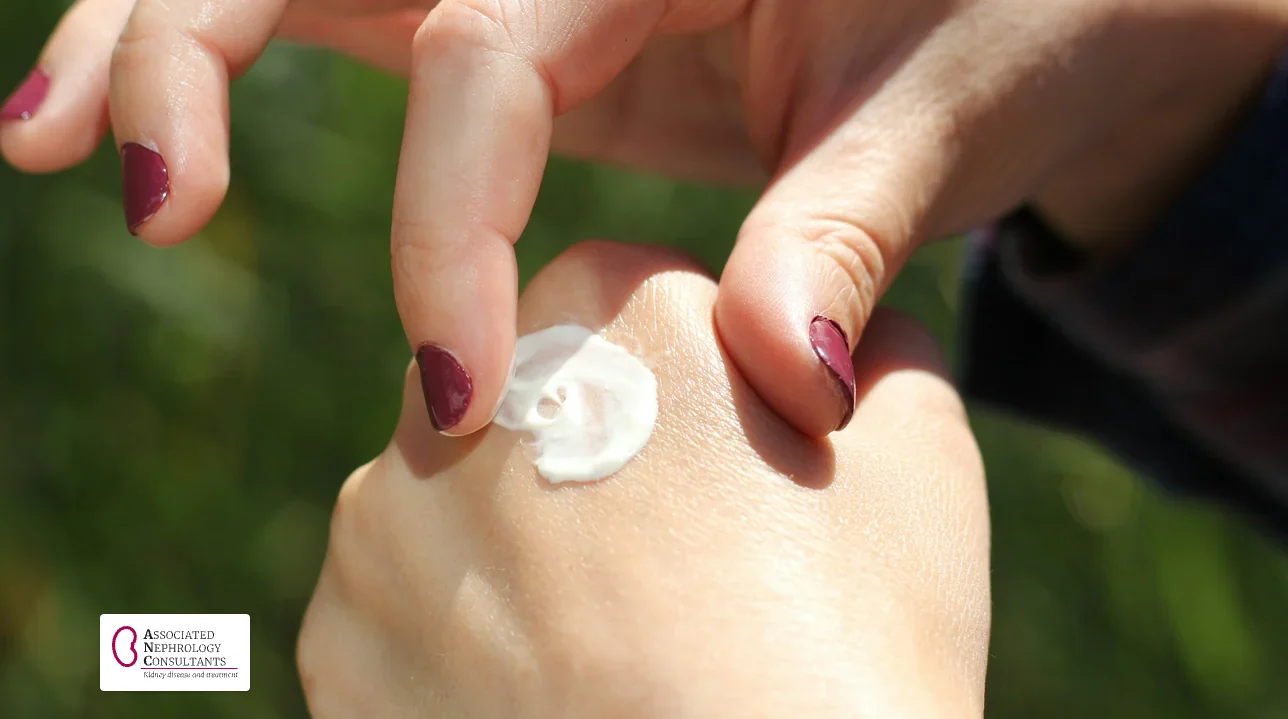
Itchy skin is a common and often overlooked problem for people with chronic kidney disease (CKD), especially in advanced stages and on dialysis. It likely comes from a mix of causes, such as waste build-up, mineral imbalances and dry skin. There are ways to ease it, from simple skin care to treatments your care team can adjust or prescribe.
Key Takeaways
- CKD-associated pruritus is itching linked to kidney disease, and it is most common in advanced CKD and in people on dialysis.
- Likely contributors include waste build-up, high phosphorus and parathyroid hormone levels, dry skin, inflammation and changes in nerve signals.
- Gentle skin care, such as moisturizing right after bathing and taking shorter, lukewarm showers, can bring some relief.
- Controlling phosphorus, getting enough dialysis and prescription options such as difelikefalin for adults on hemodialysis may help.
- Tell your care team about any itching, and get emergency help if itching comes with swelling of the face or tongue or trouble breathing.
What Is CKD-Associated Pruritus?
Pruritus is the medical word for itching. When it is linked to kidney disease, it is called chronic kidney disease-associated pruritus (CKD-aP), or sometimes uremic pruritus. It usually does not come with a rash that explains it, and it can affect your whole body or just certain areas.
It is most common in advanced CKD and kidney failure, but it can also happen in earlier stages. According to Cleveland Clinic, up to 70% of people on hemodialysis have some degree of itching, and around 25% of people with CKD who are not on dialysis have it too. People on hemodialysis or peritoneal dialysis are more likely to itch than people not on dialysis. To see how the stages are defined, read about CKD stages and treatment.
Why Does Kidney Disease Make Your Skin Itch?
Experts are not sure of the exact cause, and it is likely a mix of factors. The ones medical sources describe include:
- Waste build-up: when the kidneys do not clear wastes well, toxins may play a role.
- Mineral imbalance: high parathyroid hormone (PTH), or high calcium and phosphorus levels together.
- Not enough dialysis to remove wastes, for people on dialysis.
- Very dry skin (xerosis), which happens as sweat glands shrink.
- Inflammation and immune system changes.
- Nerve signals that are out of balance, which the body may read as itch.
Some medicines can add to itching as well. Because so many things can play a part, what works differs from person to person.
What Does Kidney-Related Itching Feel Like?
It varies a lot. For some people it is occasional and mild; for others it is constant and very disturbing. It can come and go or last all day, and it can happen before, during or after dialysis, at night or during the day. The back, the face and the arm with a dialysis access are common spots. Hot or cold temperatures, stress, physical activity, showering and dry skin can make it worse.
Itching is more than an annoyance. It can keep you up at night, and the National Kidney Foundation links it with fatigue, depression, skin infections from scratching, and shortened or missed dialysis sessions. If itching is wearing you down, raise it with your care team rather than putting up with it quietly.
How Do Doctors Know the Itch Is From Your Kidneys?
Itching has many possible causes, including dry skin, liver disease and reactions to medicines. Before deciding it is CKD-associated pruritus, your provider will usually look for other causes. That may mean checking your skin for a rash, reviewing your medicines and ordering blood tests.
For people on dialysis, the team may look at routine dialysis labs such as phosphorus and PTH. Sometimes a skin doctor (dermatologist) helps find the cause. The diagnosis starts with you, so describe how often you itch, where, and how much it affects your sleep.
What Can You Do at Home to Ease the Itch?
Ask your care team what is safe for you, then try steps like these:
- Apply moisturizer right after a shower or bath, and use it often in dry winter months.
- Take shorter, lukewarm showers or baths with a little soap, and rinse well.
- Avoid sudden temperature changes, and try a humidifier when the air is dry.
- Keep your fingernails short, and use a cool compress instead of scratching.
- Wear soft, loose clothing, and skip rough fabrics like wool.
Anti-itch lotions help some people. Check with your doctor or pharmacist before trying any over-the-counter cream or pill, because some medicines are not safe for people with kidney disease.

How Do Phosphorus Control and Dialysis Help?
High phosphorus can itself cause itchy skin. If your care team prescribes a phosphate binder, it is usually taken with meals and snacks, exactly as prescribed, so it can catch phosphorus in food before your body absorbs it. Limiting processed foods with phosphorus additives (look for “phos” in the ingredient list) also helps. Our guide to managing potassium and phosphorus covers which foods matter most.
If you are on dialysis, getting enough dialysis matters. Your team may adjust your treatment time, dialysis filter or prescription, and treat high PTH. If itching makes it hard to sit through a session, tell your team rather than cutting it short, because not getting enough dialysis is itself linked with itching. Our guide to dialysis explains how treatment works.

What Treatments Might Your Care Team Discuss?
When skin care and lab control are not enough, there are prescription options. Difelikefalin (Korsuva) was approved by the FDA in 2021 to treat moderate-to-severe itching from CKD in adults on hemodialysis. It is given through the dialysis line at the end of a hemodialysis treatment. It has not been studied in people on peritoneal dialysis and is not recommended for them, and it can cause side effects such as dizziness and sleepiness.
Other options include some medicines usually used for nerve pain, such as gabapentin or pregabalin, and ultraviolet B (UVB) light therapy, which is not right for everyone. Antihistamines, the common allergy pills, may not help much: Cleveland Clinic says they do not seem to work very well for this kind of itch and can cause side effects, though the National Kidney Foundation notes they are sometimes tried. Your doctor can weigh what fits your health and your other medicines.
When Is Itching a Sign to Call Your Doctor?
Call 911 or go to the emergency room if itching or hives come with:
- Swelling of the face or tongue, or tightness in your throat
- Wheezing, shortness of breath or trouble breathing
- Fainting
Call your doctor or care team soon if:
- Your itching is severe, does not go away, or has no clear cause
- It covers your whole body, or hives keep coming back
- Your skin or the whites of your eyes turn yellow
- It started after a new medicine, or comes with a new rash
- Scratched skin looks infected, or itching keeps you from sleeping or finishing dialysis
Frequently Asked Questions
Can Itchy Skin Be a Sign of Kidney Disease?
Kidney disease is one of many causes of itching, so itching alone does not mean your kidneys are the problem. If you itch without a clear reason, see your doctor, who can check your kidney function with blood and urine tests.
Do Antihistamines Help Kidney-Related Itching?
Often not much. Cleveland Clinic says experts do not usually recommend them for this type of itch, and some cause drowsiness, so ask your doctor before taking one.
Can You Have CKD-Associated Itching on Peritoneal Dialysis?
Yes. People on either type of dialysis are more likely to itch. Difelikefalin is not recommended for peritoneal dialysis, so your team would look at other options.
Will a Low-Phosphorus Diet Stop the Itching?
It may help if high phosphorus is part of the cause, but itching usually has more than one cause. Follow the eating plan your care team gives you rather than cutting foods on your own.
Does Itching Go Away After a Kidney Transplant?
It may. In one study cited by Cleveland Clinic, itching went away completely in nearly 3 out of 4 people who had a transplant, though a transplant is not a treatment for itching by itself.
Should You See a Dermatologist for Kidney-Related Itching?
Sometimes. Your kidney care team may suggest a skin doctor to find the exact cause and the best treatment.
Talk to ANC About Itchy Skin
If itching is affecting your sleep, your mood or your dialysis, bring it up at your next visit. ANC sees patients with all types of acute and chronic kidney disease, including people approaching dialysis and on dialysis. Contact ANC or call 651-772-6251.
Sources
- National Kidney Foundation: Pruritus (Itchy Skin)
- Cleveland Clinic: Uremic Pruritus
- FDA: Korsuva (difelikefalin) Prescribing Information
- National Kidney Foundation: High Phosphorus (Hyperphosphatemia)
- MedlinePlus: Itching
Medical Disclaimer
This article is for general educational purposes only and is not a substitute for professional medical advice, diagnosis, or treatment. Always consult a qualified healthcare provider with questions about your specific care and treatment options.